
Medical Oxygen Compressors: Where Safety Cannot Be Compromised
A medical oxygen compressor is a device that compresses oxygen for delivery to patients in clinical or home healthcare settings. Whether it is the feed air compressor in a hospital PSA oxygen generator, the booster in a HomeFill home cylinder system, or the pump in a portable concentrator, every medical oxygen compressor is a life-critical component whose failure could directly harm a patient.
This criticality places medical oxygen compressors in a special regulatory category. They must be designed, manufactured, tested, and maintained to standards far more rigorous than industrial compressed gas equipment. Procurement teams at hospitals, home care providers, and medical device manufacturers must understand these standards to make informed sourcing decisions and to maintain regulatory compliance throughout the equipment lifecycle.
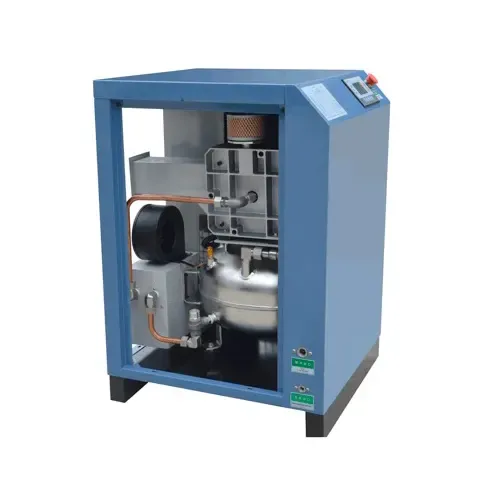
Medical-grade oxygen compressor with CE marking and ISO 13485 quality certification
Medical oxygen compressors are regulated as medical devices in the European Union (MDR 2017/745), the United States (FDA 21 CFR Part 820), and most other regulated markets. Sourcing from suppliers without appropriate regulatory authorization carries serious legal and patient safety risks.
Standards and Certifications for Medical Oxygen Compressors
CE Marking (MDR)
In the European Union, medical oxygen compressors used in medical devices must meet the Medical Device Regulation (MDR) 2017/745. CE marking requires clinical evaluation, risk management, and technical file review by a Notified Body for Class IIa and higher devices.
FDA 510(k) or PMA
In the United States, medical oxygen compressors integrated into cleared or approved medical devices must be part of the device’s FDA clearance or approval. The predicate device comparison in a 510(k) submission should explicitly address compressor performance and safety.
ISO 13485
ISO 13485 is the international quality management system standard for medical device manufacturers. A medical oxygen compressor supplier with ISO 13485 certification has documented design controls, production controls, and complaint handling processes appropriate for medical device supply.
ISO 8573-1 Class 0
Oil-free certification to ISO 8573-1 Class 0 is mandatory for any compressor in medical oxygen service. This standard defines air purity classes for compressed air; Class 0 means the supplier has demonstrated the compressor produces air with oil content below the detection limit of the referenced test method.
ISO 10083
ISO 10083 specifically covers oxygen concentrators for medical use. It defines requirements for flow rate, purity (minimum 82% O2 in most versions), alarms, and safety systems. Compressor suppliers for concentrator OEM integration must demonstrate compatibility with these system-level requirements.
PED (Pressure Equipment Directive)
In the EU, pressure-containing components of medical oxygen compressors must also comply with the Pressure Equipment Directive (PED) 2014/68/EU for pressure vessels, piping, and safety accessories above defined pressure thresholds.
| Standard/Certification | Relevance to Medical Oxygen Compressor |
|---|---|
| ISO 13485 | Medical device QMS — supplier quality system |
| ISO 8573-1 Class 0 | Oil-free compressed air — non-negotiable |
| CE / MDR 2017/745 | EU medical device regulation — required for European market |
| FDA 510(k) | US device clearance — required for North American market |
| ISO 10083 | Oxygen concentrator performance standard |
| ASTM G93 | Cleaning standard for oxygen-compatible equipment |
| ISO 15001 | Anaesthetic and respiratory equipment — oxygen compatibility |
Oil-Free Requirements in Medical Oxygen Compressors: The Technical Basis
The requirement for oil-free operation in medical oxygen compressors is rooted in both chemistry and patient safety. When oxygen at elevated pressure contacts hydrocarbon lubricants, the risk of autoignition is real and well-documented in the compressed gas industry. Even at the relatively modest pressures of a medical oxygen system (typically below 50 bar), hydrocarbon contamination can cause localized combustion in oxygen-rich environments.
Beyond fire risk, hydrocarbon contamination of medical oxygen that reaches a patient carries direct toxicological risk. Even at sub-ppm concentrations, petroleum hydrocarbons are respiratory irritants and potential sensitizers. This is why medical oxygen pharmacopeias worldwide specify maximum hydrocarbon limits in compressed and liquefied medical oxygen, and why the compressor used in a medical oxygen system must contribute zero hydrocarbons to the oxygen stream.
How Oil-Free Medical Oxygen Compressors Achieve Zero Contamination
Scroll Technology
The interleaving scroll elements compress oxygen without any contact between moving metal surfaces. Tip seals of PTFE or reinforced polymer material prevent gas leakage between compression chambers without requiring lubrication.
Diaphragm Technology
A metal or elastomeric diaphragm separates the crankcase (which may be oil-lubricated for bearing service) from the compression chamber. This hermetic separation guarantees zero oil contact with the gas stream.
PTFE Piston Rings
In oil-free reciprocating medical oxygen compressors, PTFE-based piston rings and rider rings provide gas sealing and guidance without hydrocarbon lubrication. The PTFE material is inert and oxygen-compatible.
Oxygen-Compatible Bearings
Even bearing lubrication must be managed carefully. Medical oxygen compressors use either grease-packed sealed bearings with food-grade or oxygen-compatible greases, or dry-running bearings in critical locations.

Internal view of oil-free medical oxygen compressor showing scroll elements and PTFE tip seals
Explore Our Full Product Range
Leading manufacturer of oil-free air compressors for oxygen, medical, and industrial applications
Supplier Evaluation Criteria for Medical Oxygen Compressors
Selecting a medical oxygen compressor supplier is a quality-critical decision that goes far beyond price comparison. The following evaluation framework covers the key dimensions of supplier capability that determine whether the supplier can sustain consistent, compliant supply over a multi-year procurement program.
Regulatory Certifications
Verify ISO 13485 certification scope covers the specific product category. Check CE notified body name and certificate number against the official database. For US supply, verify FDA establishment registration.
Manufacturing Capability
On-site or third-party audit of manufacturing facilities. Key areas: ESD controls, cleanroom assembly (if required), testing equipment calibration, oxygen-clean assembly area segregation.
Quality Records
Request incoming inspection records, in-process test data, and final inspection records for recent production batches. Statistical process control implementation is a positive indicator.
After-Sale Support
Evaluate spare parts availability, lead times for critical components, technical support capability, and field service coverage. For medical devices, the supplier must support the product for the regulatory-required post-market surveillance period.
Design Documentation
For OEM integration, the supplier must provide complete technical documentation: dimensional drawings, performance curves, wiring diagrams, material safety data sheets, and FMEA documentation.
Supply Chain Resilience
Assess the supplier’s key sub-component sources. Single-source dependencies for critical components (bearings, seals, control electronics) represent supply risk. Request information on alternative component qualifications.